1824 - Creation of the BIA (Bureau of Indian Affairs)
1830 - Indian Removal Act
July 1845 - phrase "Manifest Destiny" is coined
1851 - Indian Appropriations Act (allocating funds to move to Western reservations)
1864 - Sandy Creek Massacre
1871 - rider to Indian Appropriations Act: no recognition of additional Native tribes or subsequent treaties
1876 - Battle of Little Big Horn
1890 - Sitting Bull is killed; Wounded Knee Massacre
1907 - Charles Curtis becomes the first Native American US Senator (will later become vice-President in 1929)
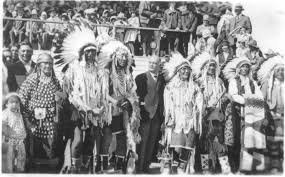
1961: American Indian Chicago Conference and Declaration of Indian Purpose
1968 - Indian Civil Rights Act by President Lindy Johnson, proposes that "termination" be replaced by "self-determination" but authorizes governmental agency over the jurisdiction of the tribes, in order to protect individual Indians from arbitrary and unjust actions of tribal governments." This creates resentment.
1968 - Indian Civil Rights Act by President Lindy Johnson, proposes that "termination" be replaced by "self-determination" but authorizes governmental agency over the jurisdiction of the tribes, in order to protect individual Indians from arbitrary and unjust actions of tribal governments." This creates resentment.
In 1968, also, the AIM (American Indian Movement) is founded.
1969: Occupation of Alcatraz; Scott Momaday's House Made of Dawn wins the Pulitzer Prize and great visibility is given to. Native-American Renaissance: read more about it here http://nativeamericanlit.com/
[see powerpoint on moodle for more details on the Red Power Movement and the Native-American Renaissance]
1969: Occupation of Alcatraz; Scott Momaday's House Made of Dawn wins the Pulitzer Prize and great visibility is given to. Native-American Renaissance: read more about it here http://nativeamericanlit.com/
[see powerpoint on moodle for more details on the Red Power Movement and the Native-American Renaissance]
and finally, one century's most well-known Native American writer (Sherman Alexie) — see what he has to say about his tradition:

No comments:
Post a Comment